Postcards from the Empire
Postcard from 1967
Sometimes it’s good to take a break from the mass insanity taking place and seemingly getting worse by the day, and take a step back in time to a different era, one that was still sane even if the early indicators of what was to come were already there.
As a kid I loved baseball. It was easily my favorite sport. I not only played it every day during summer months (on Little League teams and neighborhood wiffle ball games), I could tell you who won the batting crown, or homerun title, or the World Series in any year someone would name along with thousands of other useless stats. The walls and door of my bedroom were papered in pictures of baseball stars, and I collected baseball cards by the thousands; alas like so many other kids of my generation those cards are long gone. You get the picture.
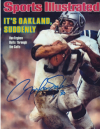
But I loved sports in general, and as a kid in the 1960s various adults who knew of my love for baseball gave me copies of Sports Illustrated, some of which I still have and occasionally peruse.
Sports Illustrated was the largest and most influential sports magazine for many years after its founding in 1954. It was owned by Time, which meant it had significant corporate money behind it. Time, Newsweek, Look, Life, Sports Illustrated, Associated Press and CBS, ABC, and NBC exercised a monopoly on what Americans saw and read in those days. Many young people today attack “Boomers” for not fighting back more, but we had few sources of information and they were essentially identical, though there has always been a small minority of patriots for generations fighting the good fight in a mostly brain-dead society. Besides who could foresee the horrors of the Permanent Cultural Communist Revolution 40 and 50 years on? But that topic is for another column. The monopoly sources of information we digested were always mainstream liberal, moving along with the tide – actually pushing the tide – especially after the assassination of JFK, when the culture instantly began moving leftward. Those of you who remember the Beatles appearing for three consecutive weeks on the very popular Ed Sullivan Show know of the huge impact they had on American society in directing attention away from the murder of a young, charismatic President and toward the first days of the counter culture.
The counter culture didn’t really come on full force until the fateful year of 1968, a year of revolution which in retrospect may have sealed America’s fate as it marked the first largescale organized attempts to subvert the country from within and from many different directions. It was the communist “march through the institutions” and it succeeded beyond anything even Joe McCarthy could have envisioned. The children and grandchildren of the ‘60s radicals are today’s overlords, “peace, love and tolerance” long ago forgotten and replaced by a rigidly totalitarian mindset.
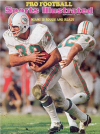
I chose the March 13, 1967 issue of Sports Illustrated to review. I have plenty of other issues to look back on if there is sufficient interest having more of them reviewed. 1967 was the year the Permanent Cultural Communist Revolution began to gain steam, which then boiled over in 1968 with the assassinations of RFK and MLK, huge protests against the Vietnam War, bombs and anarchy reigning on many college campuses, the rise of the Black Panthers and the Black Power movement, the beginning of “women’s lib,” which morphed over time into toxic feminism and the beyond-sad psychological and physical state of so many women today, the largescale fighting in the streets of Chicago during the Democrat National Convention, and a lot more.
When I look back at these old Sports Illustrateds, I focus on not just the articles, but the racial dynamics of them as compared to the racial dynamics of today, the ads of the time, and the costs of various things, whether advertised items, the salaries of athletes, the cost of building sports arenas and the value of sports franchises, etc.
The articles in Sports Illustrated in 1967 were longer and more varied than they became over time, reflecting the longer attention span Americans then had. There were also weekly departments featuring such non-mainstream sports as boat racing, horse shows, bridge and other pursuits. Hockey and golf were covered much more than they later were – ESPN and its brother far-left outlets have done their best to diminish interest in hockey because it’s just “too darn White,” while golf coverage focused solely on Tiger Woods, who while a great golfer was also the most over-hyped, over-worshipped athlete ever along with various basketball and football stars as black athletes began receiving far more lavish attention than White ones, and if you haven’t noticed that yet you obviously have zero interest in sports and how they’re covered.
To briefly look at a few articles from the 3/13/67 SI, there was a piece on that year’s Doral Open golf tournament. Keep in mind that according to the Bureau of Labor’s statistics, it takes $9.80 today to purchase what $1 could in 1967, or just short of ten times as much. As seemingly always with government statistics, that’s fake news, in this case greatly underestimating the real inflation rate.
Doug Sanders won the ’67 Doral Open and received a check for $20,000. Today the average first place money for winning PGA Tour events is between $1 million and $2 million, or between 50 and 100 times as much as Sanders won. The winner of The Players this year will take home $4.5 million and The Players isn’t even a major, one step below. The winner of the Tour Championship will win $10 million in ’26, while the winner of the Fed Ex Cup, a year-long cumulative event, also receives $10 million. As a side note, the Doral Country Club is now owned by the President of the United States.
The article “Crystal and Steel on the Ice” was about the women’s world figure skating championship, won by then 18-year-old Peggy Fleming, who went on to win the gold medal at the 1968 Winter Olympics. Peggy was described as a “beauty from Colorado Springs who looks as fragile as a Viennese chandelier.” Imagine the horror that would erupt today if any type of traditional femininity was ascribed to an American figure skater, or any female public figure for that matter. The article adds more now taboo language: “Girl watching in general, and Peggy watching in particular, is one of the more rewarding aspects of figure skating.”
Peggy Fleming indeed was lovely to look at and watch, feminine and graceful while still being the best at her craft. Nowadays, the femininity of female athletes is long gone in many sports. Those of a certain age may recall how the somewhat muscular girl swimmers from East Germany were ridiculed when they excelled in the 1960s. Now it’s almost mandatory that American female athletes be muscle-bound, including skaters and gymnasts, while the “culture” encourages women in general to be not just tough looking and acting, but covered in tatts and fat and to have green or purple hair. And some people sincerely wonder why so many American men no longer want anything to do with American women. Add on laws that rape husbands in divorces and child custody, or that throw them in jail based solely on a woman’s claim of abuse, and the destruction of the natural harmony between men and women is all but complete. But that’s also a topic for another column.
This SI issue contained the second of a three-part series on Arnold Palmer by his associate and business partner Mark McCormack called “My Friend Arnold Palmer.” Part Two was subtitled “Evolution of a Golf Tycoon,” which detailed Arnie’s sprawling business empire, engineered by McCormack. Until meeting McCormack, Palmer had no interest in marketing himself, certainly the norm at the time as Palmer subsequently became the first athlete to endorse lots of different products, but was stuck at the time with a low-paying automatically renewing contract with Wilson Sporting Goods that paid him peanuts even for that era (late 1950s, early 1960s), compared to his value as perhaps the most famous athlete in America for a number of years.
By ’67 Palmer had six companies that he owned, with numerous spinoffs, that employed hundreds of people. Yet combined they only did $15 million in business on a yearly basis. Today that dollar amount thanks to inflation would be at least a hundred times that much.
As far as endorsements, Wonder Bread paid Arnie all of $3,500 for doing a commercial for them. An ad for Heinz netted him a whopping $500. Tell us again how inflation has only gone up by 1,000 percent in the past 60 years. Add a zero or two for a more realistic number.
By the way, whether you’re a golf fan or not, you should see the three-part documentary on Palmer’s life first aired by Golf Channel several years back and which is periodically repeated. The aptly named “King” had an amazing life, including flying his own jet to tournaments and special appearances around the world. He was idolized in Japan just as he was in America. His trademark multi-colored umbrella is still around today and so are many of the ventures he and McCormack started in the 1960s. Arnold Palmer was a great golfer, not the greatest ever but one of the best, but “Arnie’s Army” came about because of Palmer’s go-for-broke playing style, hitching up his pants and chain smoking on golf courses, and most of all for the kindness and respect he showed everyone, not just the Presidents and CEOs he golfed with. Golf was good to him and he always gave back. Arnold Palmer was blessed with great charisma and was truly a man of the people and his death in 2016 affected me more strongly than anyone’s has outside of my family and close friends.
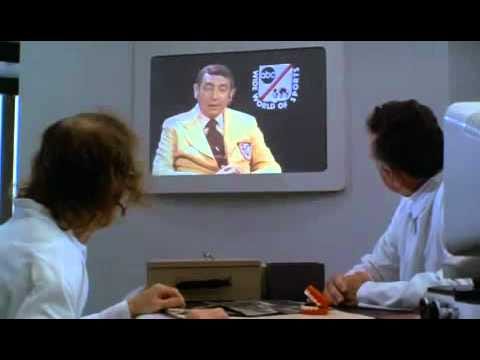
On page 70 we find “Would You Let This Man Interview You?” Subheading: “If the answer is yes, you might wind up feeling like the defendant at a murder trial. The man is Howard Cosell, a nasal-voiced ex-lawyer who is quick to let you know he is the best sportscaster around.”
In 1967, Cosell was fairly well known, but didn’t become a cultural phenomenon, a mostly despised one, until 1970 when Monday Night Football began. Before that Cosell had been a fixture on the New York City sports scene, and a national one due to his doting and verbal sparring with Cassius Clay, later known as Muhammad Ali. In fact, it was right around early 1967 that establishment media outlets like Sports Illustrated began referring to Clay as Ali. Before he formally changed his name there had been a lot of resistance as Ali was a Black Muslim name, and Ali was very unpopular in many quarters for his braggadocio and refusal to serve in Vietnam after being drafted.
The Vietnam War was very divisive throughout the 1960s, with conservatives and others being strong hawks and liberals opposing it. As time went on it became clear that everyone should have opposed the war as it was conducted in a way as to never win, costing the lives of over 58,000 U.S. soldiers with over 300,000 injured. And an estimated two million-plus Vietnamese civilians on both sides died, as Washington treated the Vietnamese as essentially sub-human. But that too is a subject for another column.
Cosell was truly overbearing and obnoxious, from his voice to his pseudo-big words, to his m.o. of making himself part of every story he covered. He was lampooned in a funny way in Woody Allen’s 1973 movie “Sleeper.”
Sports Illustrated had a weekly paid circulation in the millions at the time and plenty of pages in each issue were advertisements. Cars, alcohol, cigarettes, sports clothing and travel were always prominent.
Of the people pictured in the ads (rather than just a photograph of the product) all were White with the exception of a couple of black singers shown postage stamp sized as part of a pitch for an album called “12 Golden Greats.” Most of the others that featured people showed a White couple, dignified, usually middle-aged, well-dressed with some men wearing suits and women dresses. Some were smiling while others just had a pleasant look, not like today’s ads where people are often giddy with joy simply from looking at a candy bar or pizza. Of course White men have since been replaced in advertising, but that too is a topic for another time.
An ad for Mennen Skin Bracer showed a sexy young White girl wearing a bikini with the headline “Now Get Swedish Girls.” Almost all the cars advertised were far longer than today’s, a few appearing to be the length of a passenger plane.
Of the seven feature articles, not a single one was about a black athlete, though that was more the exception than the rule for the time. Black boxers, sprinters, basketball players and others were getting more and more coverage, and by 1968 Sports Illustrated ran a landmark five-part series called “The Black Athlete: A Shameful Story,” that accelerated the agenda of glorifying Black athletes while claiming Whites were inferior to them, a Big Lie, but that too is a topic to be covered more in depth at another time.
America in 1967 was still recognizably America 1.0, with the trends that eventually created today’s America 2.0 mostly suppressed until they exploded full force in 1968.
As for Sports Illustrated, as an adult I subscribed off and on for many years, until it went full “woke,” replacing sexy girls in tiny bikinis (the one-time greatly anticipated swimsuit issue that came out each winter) with trannies, homosexuals, grandmas, some men, and just a lot of unattractive people in general.
Instead of a weekly with millions of readers, Sports Illustrated is now a monthly with a small readership. If it finally went out of business tomorrow, no one would notice.
Postcard from 1967

donwassall.substack.com